Interior Designers: Let's Talk Recessed Downlights
A cheap downlight and a spec-grade one look alike in the box. For designers speccing recessed lighting: where they differ and why your client feels it.

The short answer: A cheap recessed downlight and a spec-grade one can look identical in the box. What you cannot see is what your client lives with: the optics, the driver, and the heat sink. Those three parts decide whether the light disappears into the ceiling or glares back all evening, whether it dims clean or flickers, and whether it still looks right in five years. VidaLite's Libra downlights are built around them, not around the lowest price.
Recessed downlights, which designers often just call spots or can lights, are the most-specified fixture in a modern interior and the easiest to get wrong. This guide opens one up, shows what each part does, and why the bargain version works against you: glare, flat color, a room that never settles. Your client will not read the spec sheet. They will feel it every evening.
They look the same in the box. They are not.
Most recessed downlights are sold on two numbers, wattage and price, which is how the cheap ones get away with it. The parts that decide how the light actually feels are the ones you never see on the shelf: where the source sits, the lens in front of it, the driver behind it, and the metal that carries the heat away. Get those right and the light is calm, accurate, and quiet. Cut corners and you get glare nobody can escape, color that flattens the room, and a fixture that fades before the project photos are dated.
What is actually inside a downlight
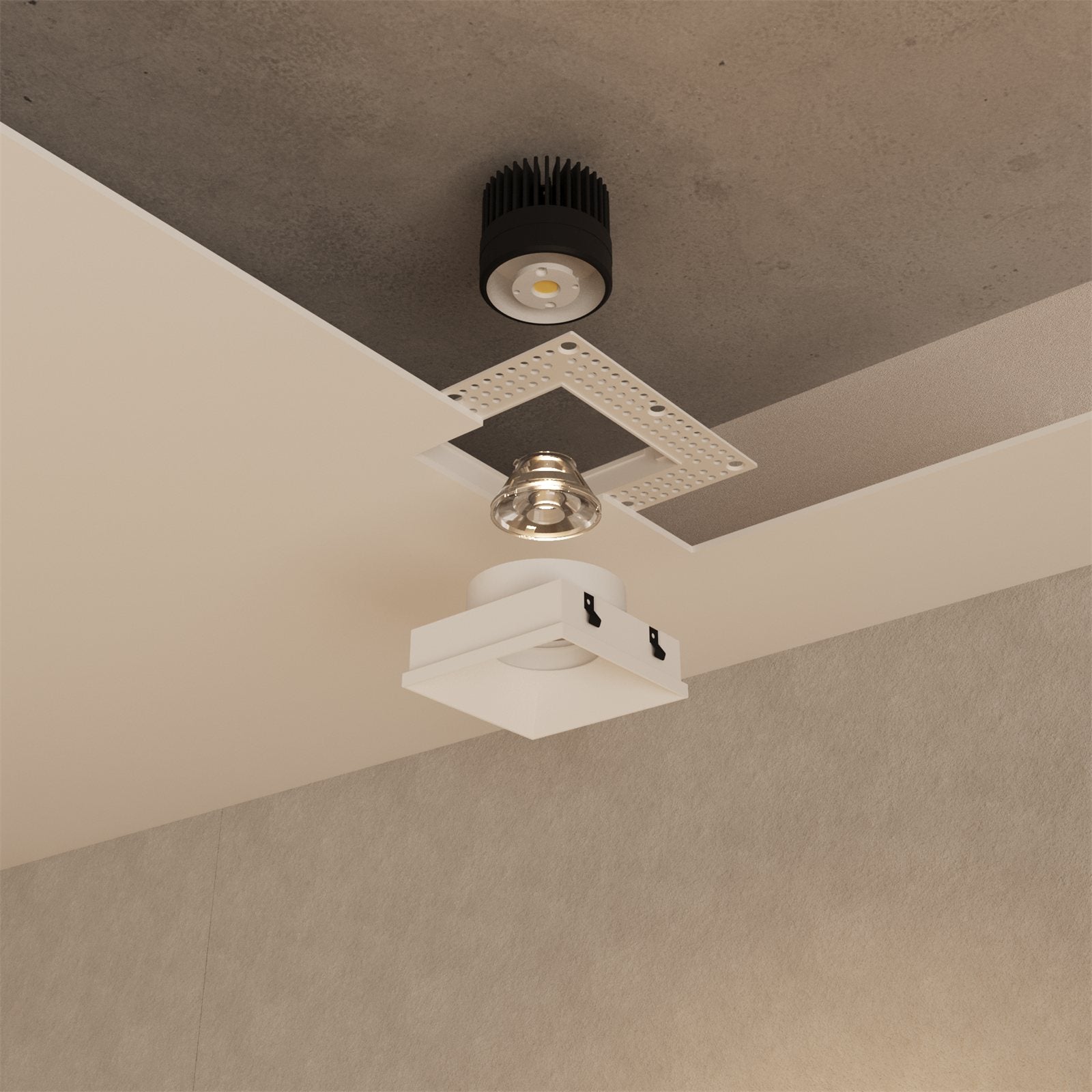
A recessed downlight is a small system. Each Libra fixture is built from six parts, and each one is a place where a cheaper fixture saves money at your client's expense.
| Part | What it does |
|---|---|
| Heat sink | The aluminum body pulls heat off the LED so brightness and color hold steady. Thin, cheap housings trap heat, which is why bargain fixtures dim and yellow early. |
| LED chip | The light source. Libra uses a 90+ CRI chip with five selectable color temperatures built in, so skin and finishes read true. Budget fixtures often drop to CRI 80 or lower, where color goes flat. |
| Reflector | Directs the light down and out in a controlled 60 degree spread instead of letting it spray sideways as glare. |
| Low-glare lens | Seats in the optic holder and softens the source so you see light in the room, not a bright dot drilling into your eye. It ships included. |
| Driver | Converts house power to the steady current the LED needs. A good driver dims smoothly with no flicker or buzz. A cheap one is where flicker comes from. |
| Mud flange | On trimless models, the plaster-in ring that lets the fixture finish flush into the ceiling with no visible trim ring. |
Glare is the part you feel
Glare is what happens when a bright source sits in your field of view with nothing to soften it. The eye fights the contrast, you squint without noticing, and after a few hours it becomes the tight, tired feeling that turns into a headache. Cheap downlights cause it two ways: the lens sits right at the ceiling plane, and there is no real optic to diffuse the source. You end up staring into the chip.
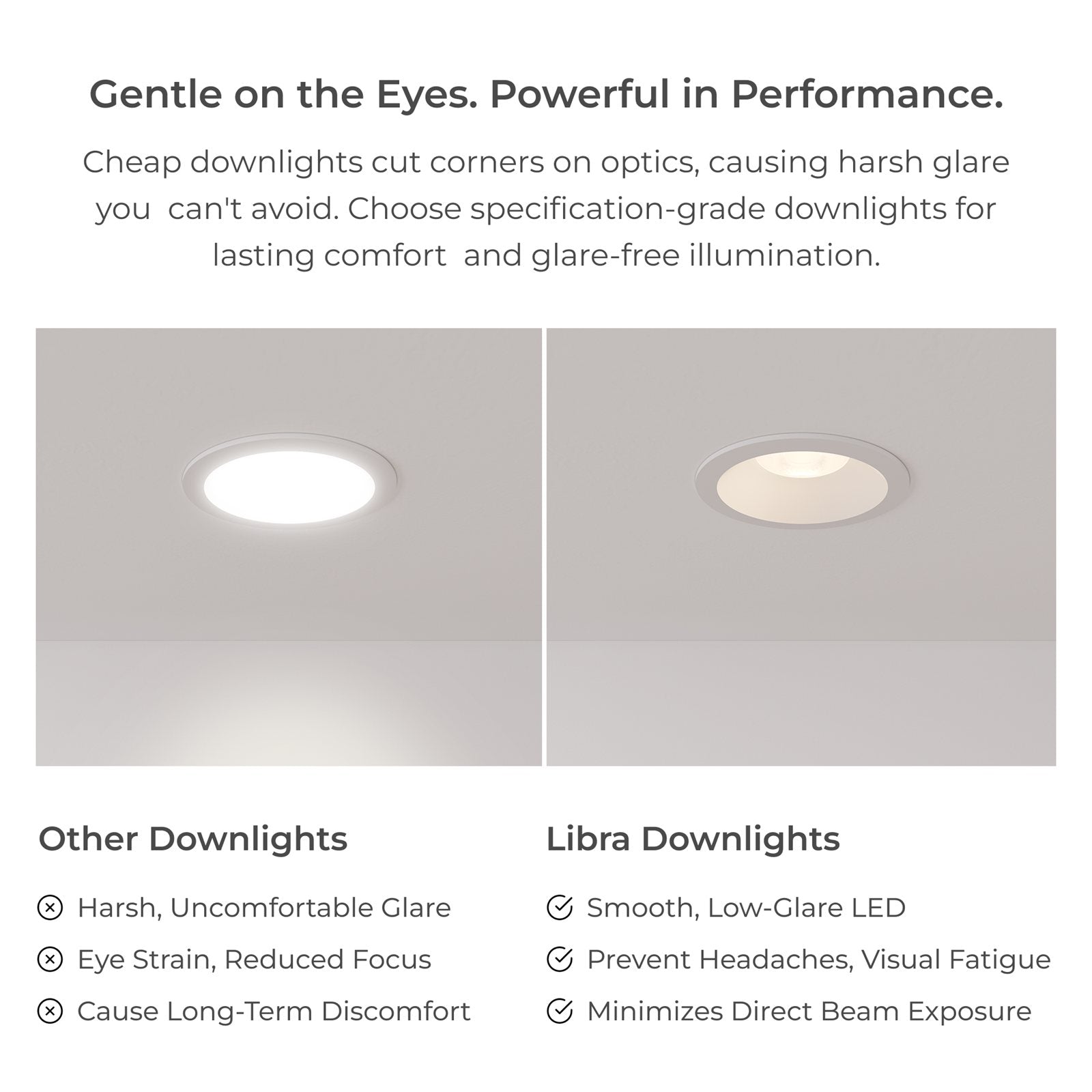
Libra moves the bright part out of your line of sight. The source is set deep inside the housing, and the included low-glare lens diffuses it, so you light the room, not your retinas. That recessing is one of the biggest reasons a good downlight feels calm and a cheap one feels harsh.
| What to check | Bargain downlight | Libra spec-grade |
|---|---|---|
| Source position | At the ceiling surface | Recessed deep behind a lens |
| Optics | Bare or basic diffuser | Low-glare lens included |
| Color accuracy | Often CRI 80 or lower | CRI 90+ |
| Color temperature | Fixed, single tone | Selectable 2700K to 5000K |
| Dimming | Can flicker or buzz | Smooth TRIAC, no flicker |
| Heat and life | Thin housing, fades early | Aluminum heat sink, rated 50,000 hours |
Why cheap LEDs wear on the eyes
Two quieter problems do as much damage as glare. The first is flicker: a cheap driver lets the light pulse, often faster than you consciously see and worse when dimmed. The eye still tracks it, and for many people that strain surfaces as fatigue and headaches by evening. A quality driver holds the current steady, calm at full or dimmed low. The second is color. Budget LEDs commonly sit at CRI 80 or below, leaving skin flat and the finishes you specified looking muddy. Libra runs 90+ CRI across the family, so the room reads the way you drew it.
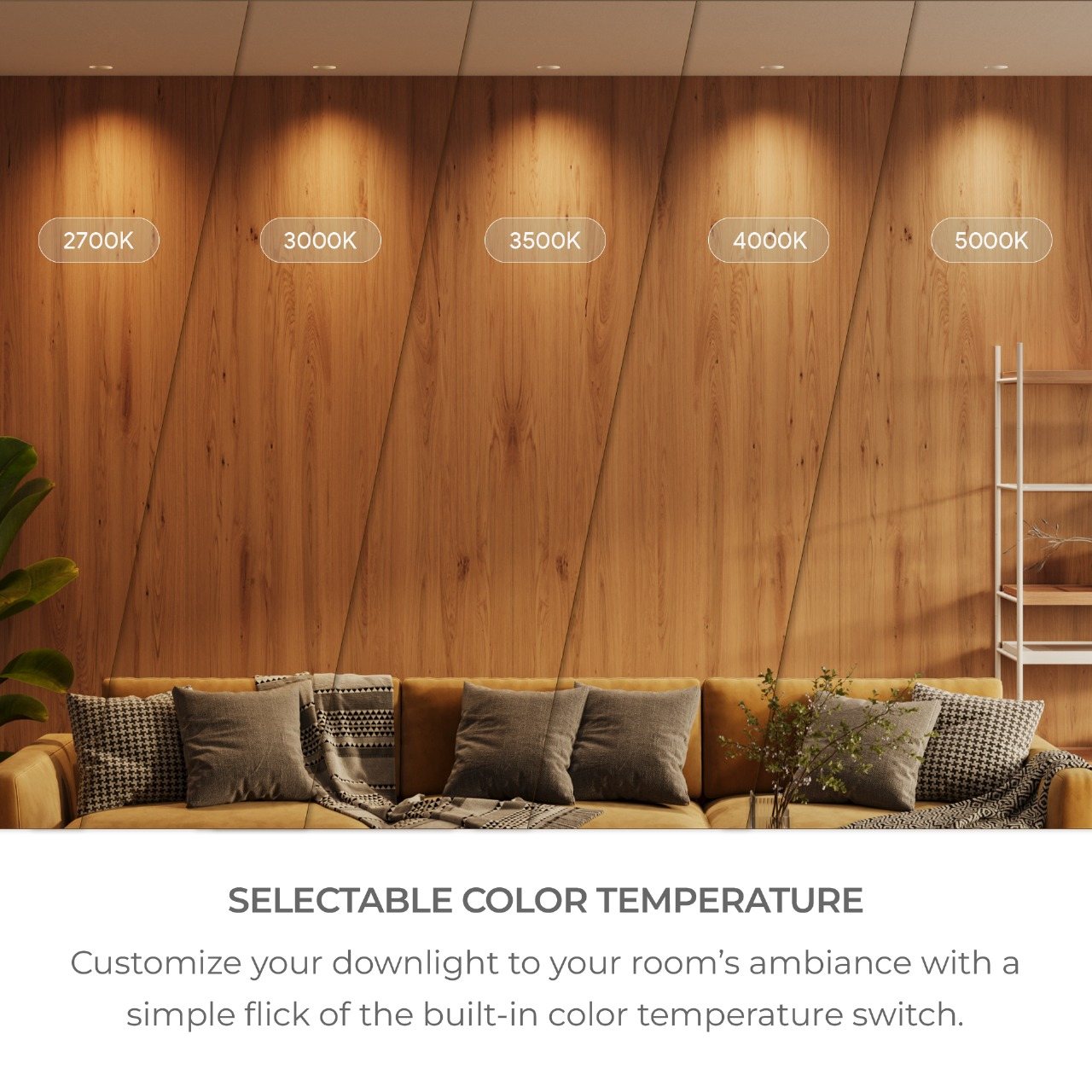
Color temperature is where lighting meets mood, and a single fixed tone cannot do both jobs. Run it warm and the kitchen feels sleepy; run it cool and the bedroom feels like an office. Libra sets 2700K to 5000K on a built-in switch, so each room gets the right tone instead of living with whatever a bargain fixture happened to ship. If you are deciding, our guide to color temperature walks through which Kelvin suits which room.
Built to a spec, not to a price
Libra is a canless, specification-grade downlight: no separate housing to buy, and a fixture engineered to architectural standards rather than to a big-box price point.
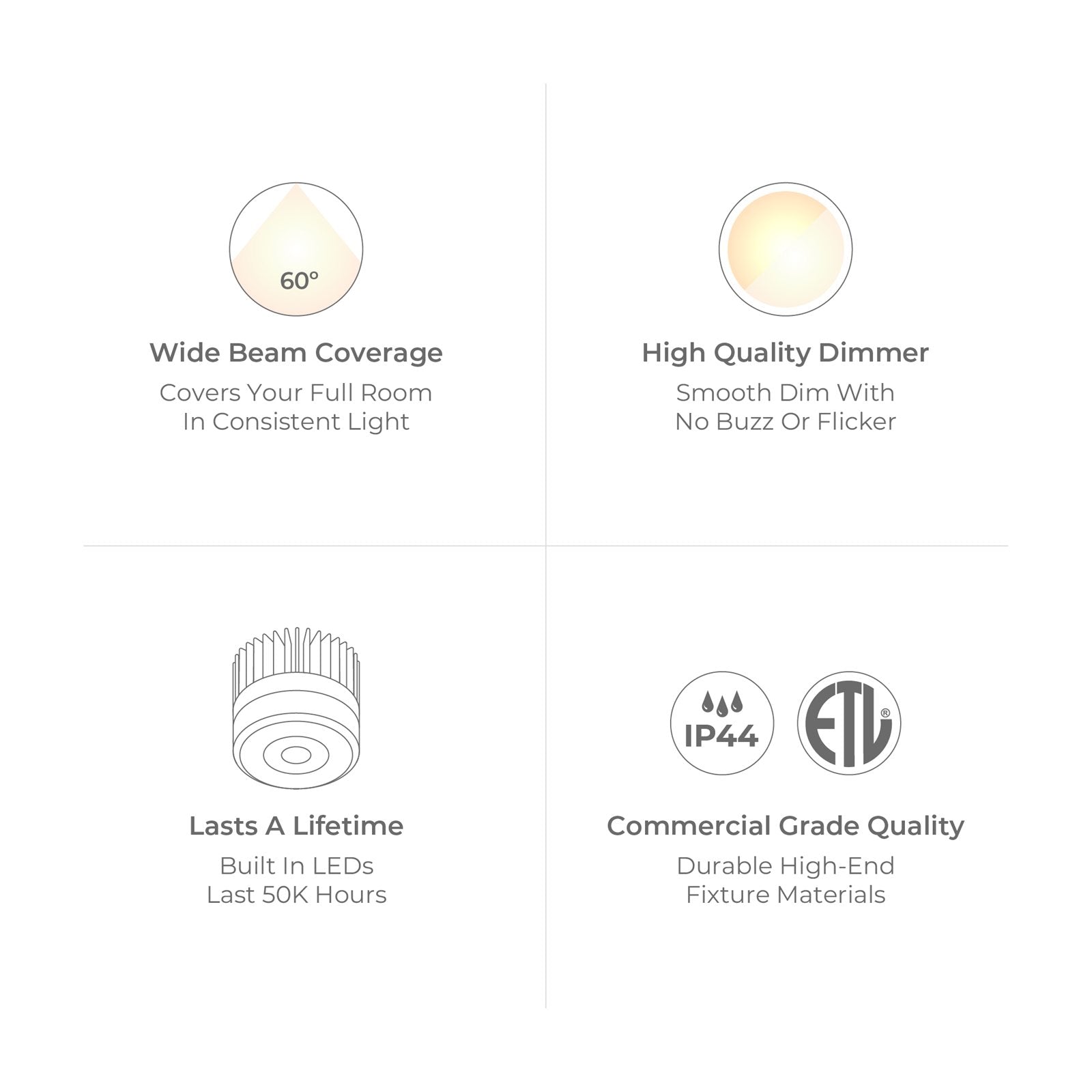
It is ETL listed and IC-rated, so it can sit in direct contact with insulation, with IP44 wet-rated models for showers and covered exteriors. The honest trade-off: trimless models take more care at install, since they finish into the plaster for that seamless look. Want a faster drop-in? The trim version gives you a clean flange. Either way the optics, the driver, and the CRI are identical.
Which Libra downlight to spec
Libra comes in 2 inch and 3 inch apertures, round or square, in three trim styles. The light engine is the same across them; you are choosing the look and the install.
| Room or use | Pick | Why |
|---|---|---|
| Living, bedroom, hallway | Trim, round or square | Clean flush look, fastest install |
| Architectural, high-design | Trimless | Disappears into the ceiling, no visible ring |
| Art walls, accenting | Gimbal | The aperture tilts to aim light at a feature |
| Showers, covered exterior | Wet-rated model | IP44 rated for damp and wet locations |

For layout, spacing, and trims, our guide to choosing recessed lighting covers planning the ceiling. This one is about why the fixture itself earns its place on your spec.
Bought from VidaLite, backed by VidaLite
Every Libra downlight bought on vidalite.co carries a 5-year warranty, returns are free for 30 days, and orders ship from US stock, with most in-stock items leaving the warehouse in 1 to 2 business days.
Frequently asked questions
Why do my recessed lights hurt my eyes?
Almost always glare. Cheap downlights put a bright source right at the ceiling surface with little or no diffusing optic, so the bright part of the fixture sits in your field of view and your eyes fight the contrast. A downlight that recesses the source and adds a low-glare lens, like Libra, keeps the bright part out of your sightline so you get the light without the strain.
Are expensive recessed lights worth it?
For a fixture a room lives under for years, yes. The price difference buys better optics, a flicker-free driver, higher color accuracy, and a heat sink that keeps the light from fading. You feel all of that every day in comfort and in how the room looks, long after the lower sticker price has stopped meaning anything.
What is a low-glare downlight?
One built so you do not see the bright LED directly. It recesses the source deep into the housing and puts a diffusing lens in front of it, so the light reaches the room but the harsh point of brightness stays hidden. Libra ships with a low-glare lens included for exactly this reason.
Do cheap LED downlights really fail faster?
Often, yes, and the cause is heat. LEDs lose brightness and shift color as they run hot, so a fixture with a thin housing and a weak heat sink fades sooner. A solid aluminum body carries heat away, which is why Libra is rated for 50,000 hours.
What CRI should recessed lighting be?
Look for 90 or above. CRI measures how truly a light shows real colors; many budget LEDs sit at CRI 80 or lower, which leaves skin and finishes looking flat. Libra runs 90+ CRI across the family so the space looks the way it was designed.
Can I dim Libra downlights without flicker?
Yes. Libra is TRIAC dimmable and built to dim smoothly with no flicker or buzz, using standard residential dimmers. Flicker on a dimmer is usually a sign of a cheap driver, the part bargain fixtures cut first.
Ready to spec it? Browse the full Libra downlight collection, compare trim, trimless, and gimbal, and pick the aperture that fits the ceiling. Working on a project? Our trade program adds 15% trade pricing and volume quotes.