How to Choose Recessed Lighting
Downlights, can lights, and pot lights are one fixture. How to choose the trim, shape, size, color temperature, and a low-glare setup, plus how many you need.

The short answer: Recessed lighting, also called downlights, can lights, or pot lights, sits flush in the ceiling for clean, even light. To spec it you make four choices: the trim style (trim, trimless, or gimbal), a round or square aperture, a size from 2 to 4 inches, and a color temperature that suits the room. Keep glare low by choosing small, recessed or trimless apertures and aiming gimbals away from eye level, and space the fixtures about half your ceiling height in feet apart. At VidaLite, the premium Libra series covers architectural and trimless looks, and the value Likora series covers the fundamentals at a friendlier price.
Because the fixture tucks up and out of view, recessed lighting works in almost any space: kitchens, living rooms, hallways, bathrooms, offices, and commercial fits. This guide walks through the choices that matter so you can spec the right downlight the first time.
Trim, trimless, or gimbal
The first decision is how the fixture meets the ceiling.
- Trim downlights have a slim visible flange around the aperture. They are the easiest to install and the most forgiving on existing ceilings, since the flange covers the cut edge.
- Trimless downlights are mudded into the ceiling so the aperture appears to be cut straight into the drywall. No flange, no border, just light. This is the cleanest look and the choice for minimalist and architectural interiors. It takes more finishing work at install, so plan for it during construction or renovation.
- Gimbal downlights have an adjustable head that tilts, so you can aim the beam. Use them to accent artwork, wash a wall, or correct for sloped ceilings.
Round or square
Round apertures are the classic choice and disappear most naturally into a ceiling grid. Square apertures read as more deliberate and architectural, and they pair well with linear, modern spaces. There is no wrong answer here, but stay consistent within one room.
Aperture size
Aperture sizes in our range run from compact 2 inch openings up to 4 inch. Smaller apertures look more refined and disappear into the ceiling, and modern LED output means a 2 inch downlight can still carry real brightness. Larger apertures spread light more broadly and suit taller ceilings and bigger rooms.
Glare, and how to keep the light comfortable
Glare is what you get when the bright LED sits in your direct line of sight against a darker ceiling. It makes people squint, and it leaves a room feeling spotty instead of calm. Good recessed lighting is as much about hiding the source as it is about raw output, and the choices above are the levers that control it.
- Trimless trims remove the visible flange ring that catches the eye, so the aperture reads as a clean cut in the ceiling rather than a bright bezel.
- Gimbal heads tilt, so you can aim the beam onto a wall, a counter, or artwork, and away from where people sit. The light does its job without the source pointing back at eye level.
- A smaller aperture is a smaller, quieter point of brightness. A 2 inch opening draws less attention than a wide can, even when it is on.
- Dimming is the simplest fix of all. Run the fixtures below full output on a dimmer and you set a comfortable level for the room and the time of day.
- Placement matters too. Even spacing, and keeping the first row off the wall as covered below, avoids hot spots and scalloped light.
The payoff is light that feels comfortable to sit under: clean ceilings, no harsh dots overhead, and a calmer room in the spaces where people look up, like living rooms, bedrooms, and hospitality. Libra offers both trimless and gimbal trims, and every Libra downlight is dimmable, so you can tune the level to the room.
Brightness and color temperature
Our downlights use integrated LEDs, so there is no bulb to buy or replace, and the driver is built in. They are dimmable on standard residential dimmers, and color temperature options run from a warm 2700K to a crisp 5000K.
| Color temperature | How it feels | Best for |
|---|---|---|
| 2700K to 3000K | Warm and relaxed | Living rooms, bedrooms, dining |
| 3500K to 4000K | Neutral and clean | Kitchens, bathrooms, work areas |
| 5000K | Bright and task focused | Garages, utility spaces, commercial fits |
If you want to weigh warm against cool in more detail, read Color Temperature Explained.
Glare, and why low-glare matters
Glare is the harsh brightness you notice when a light source sits in your line of sight. In a ceiling full of downlights it shows up as hot spots that pull your eye upward and tire it over a long evening. The fix is not less light. It is keeping the diode itself out of view while letting its light through, which is the whole job of a well-designed recessed fixture.
A few things keep glare low in a downlight:
- A recessed source. The deeper the LED sits up inside the housing, the narrower the angle you can see it from directly. A small aperture helps for the same reason, shielding the source from most seated viewing angles in a room.
- A trimless or flush profile. Without a bright reflector ring framing the opening, there is less contrast between the fixture and the ceiling, so the light reads as softer and the fixture nearly disappears.
- Aiming instead of over-lighting. A gimbal lets you tilt the beam onto a wall or work surface and away from seated eye level, so you light the room without lighting the people in it.
- Dimming and warmth. Lower output and a warmer color temperature in the evening cut perceived glare further. Put downlights on a dimmer and you are controlling comfort, not just brightness.
This is where Libra's compact 2 and 3 inch apertures and trimless option earn their place. A small, recessed, trimless downlight delivers even light to the floor while keeping the source discreet, which is exactly what you want over a dining table, a reading chair, or a hotel corridor where people naturally look up.
How many do you need
A useful rule of thumb: divide your ceiling height in feet by two, and space the downlights that many feet apart. An 8 foot ceiling suggests roughly 4 feet between fixtures. Keep the first row about 2 to 3 feet off the wall, and add aimed fixtures (gimbals) where you want accents rather than general light. When in doubt, slightly more fixtures on a dimmer beats too few with no headroom.
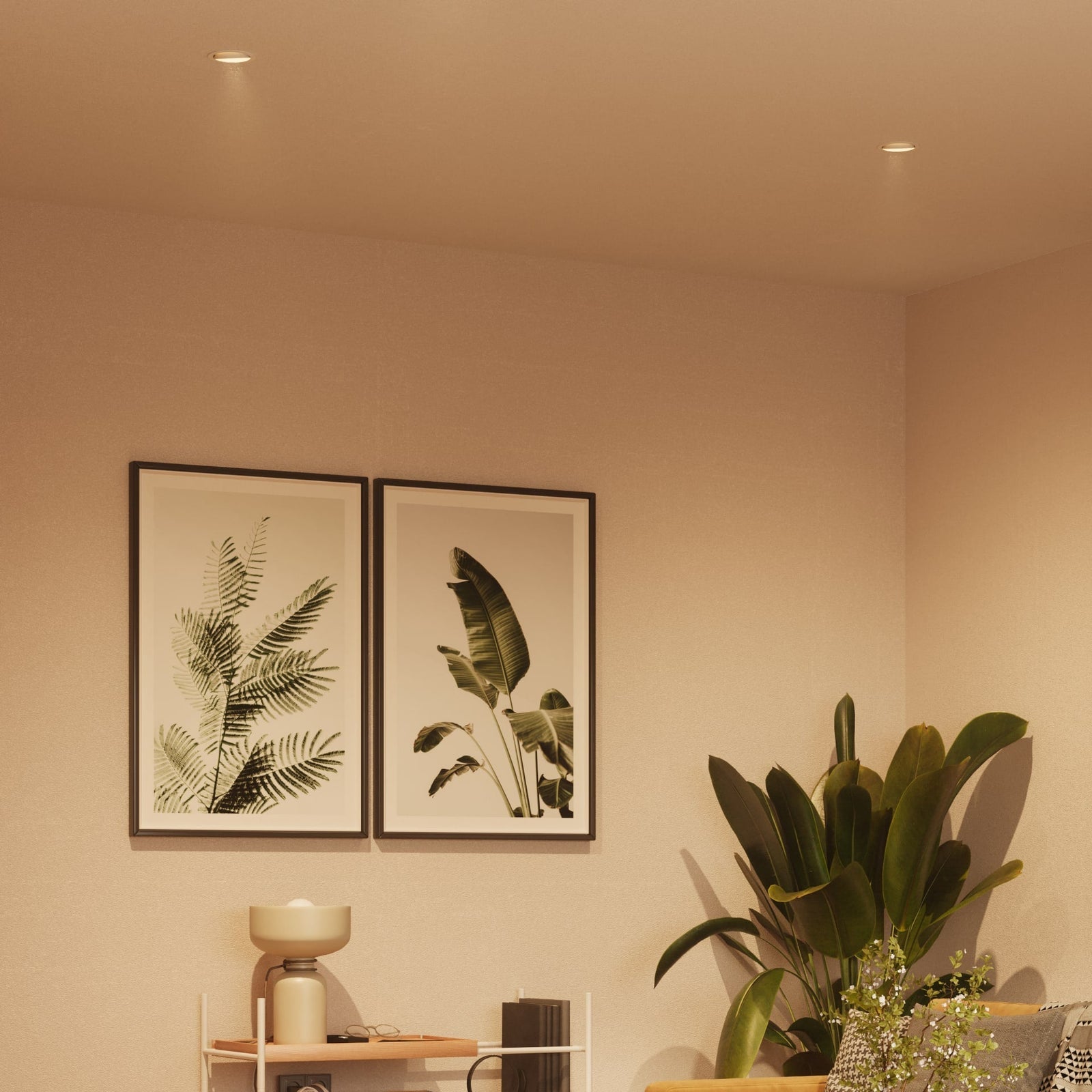
Two series, one decision: Libra or Likora
Our Downlights collection is built around two series.
| Series | Best for | What you get |
|---|---|---|
|
Libra Premium line |
Ceilings where the detail matters and you want the trimless, architectural look | Trim, trimless, and gimbal options in round and square, compact 2 and 3 inch apertures, 12W and 14W outputs |
|
Likora Value line |
Larger counts, rentals, and budget-driven projects | Clean, capable downlights that cover the fundamentals at a friendlier price |
Bought from VidaLite, backed by VidaLite
Every fixture purchased on vidalite.co carries a 5-year warranty, returns are free for 30 days, and orders ship from US stock, with most in-stock items leaving the warehouse in 1 to 2 business days.
Frequently asked questions
What is the difference between trim and trimless downlights?
A trim downlight has a slim visible flange that covers the cut edge, which makes it easy to install on existing ceilings. A trimless downlight is mudded into the drywall with no border for the cleanest, most architectural look, and it takes more finishing work at install.
What size recessed light should I use?
Our apertures run from 2 to 4 inches. Smaller 2 to 3 inch openings look more refined and disappear into the ceiling while still carrying real brightness. Larger apertures spread light more broadly and suit taller ceilings and bigger rooms.
How do I reduce glare from recessed lighting?
Choose a trimless or smaller aperture so the bright source is less prominent, aim any gimbal fixtures onto walls and objects rather than into the room, space the lights evenly and keep them off the walls, and put everything on a dimmer so you can set a comfortable level. Libra offers trimless and gimbal trims, and every fixture is dimmable.
How far apart should recessed lights be?
Divide the ceiling height in feet by two and space the fixtures that many feet apart, so an 8 foot ceiling means roughly 4 feet between lights. Keep the first row 2 to 3 feet off the wall.
How do I reduce glare from recessed lights?
Keep the source out of direct view and control its output. Choose a smaller aperture and a recessed or trimless profile so you do not catch the diode from across the room, use gimbals to aim light at walls and surfaces rather than seated eye level, and put the circuit on a dimmer to bring levels down in the evening. Libra's compact 2 and 3 inch apertures and trimless option are built around this kind of low-glare placement.
Can I dim VidaLite downlights?
Yes. They use integrated LEDs with the driver built in and are dimmable on standard residential dimmers.
Should I choose Libra or Likora?
Choose Libra when the ceiling detail matters and you want trimless or architectural options. Choose Likora for larger counts, rentals, and budget-driven projects that need clean, capable downlights at a friendlier price.
Ready to look? Browse the full Downlights collection, or jump straight to Libra or Likora. If you are speccing a larger project, our trade program adds 15% trade pricing and volume quotes on top.